A Marriage Turned into a Battleground of Words, Wounds, and Truths

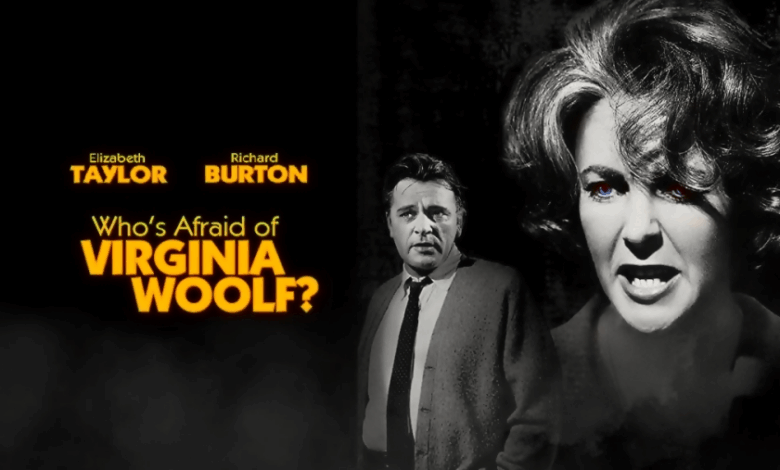
Who’s Afraid of Virginia Woolf? is one of the most powerful psychological dramas in film history, a work that strips away every mask a marriage can wear and exposes what lies underneath. With only four characters, a single night, and a handful of claustrophobic spaces, the film manages to create an emotional hurricane. It is a raw, intense, and often painful story of two people imprisoned in a relationship that has grown into something destructive yet inseparable. The strength of the film lies not only in its emotional weight but also in its extraordinary craftsmanship.
One of the greatest achievements of the film is its cinematography. The camera becomes an active force within the drama. Every frame feels intentional, every composition a psychological trap. The close-ups are suffocating, the shadows heavy, and the angles constantly push the characters into corners, visually reflecting their emotional entanglement. The precise framing gives the film a sense of pressure and intimacy that few dramas achieve. It is a film where the camera speaks as loudly as the characters.
The performances are also extraordinary. Elizabeth Taylor, in one of the finest roles of her career, transforms herself into Martha, a woman whose fury comes from a deep reservoir of pain and disappointment. She is volatile, sharp, and unpredictable, yet beneath that aggressive exterior lies a wounded soul desperate for attention and acknowledgment. Richard Burton, as George, counters her with a calmness that hides its own kind of violence. His stillness becomes a weapon, his quiet sentences cut as deeply as Martha’s shouts. Together, they form one of the most compelling acting duos ever captured on film. Their performances do not feel like acting; they feel like two lives collapsing in front of us.
The film can be confusing at times, especially for viewers unfamiliar with emotionally manipulative relationships. The confusion is not a flaw, but a deliberate reflection of the characters’ games. This is a world built on half-truths, shifting realities, and emotional traps. The line between honesty and performance, between confession and cruelty, constantly shifts. The film wants the audience to feel lost, because the characters themselves are lost in their own psychological maze.
The psychological core of the film is built on its characters, each of whom represents a different dimension of emotional dysfunction.
Martha is a portrait of unresolved wounds. Raised in the shadow of a powerful father, she never found an identity of her own. Her aggression is a shield against deep insecurity. She humiliates George because she feels humiliated by life. Her rage is not born from hatred alone but from longing: longing for validation, longing to feel alive, longing to escape the emotional emptiness that consumes her.
George, on the other hand, is a man who has been emotionally beaten down for years. His quietness is not weakness but accumulated pain. He fights with a different method, using psychological games instead of shouting. His intelligence becomes both a defense mechanism and a weapon. He is a man who feels defeated by the world but refuses to surrender completely. The tension between the anger he suppresses and the control he tries to maintain creates the film’s most haunting moments.
Nick, the young biology professor, arrives as an outsider but quickly becomes part of the toxic ecosystem. At first confident and seemingly in control, he is gradually pulled into the chaos of George and Martha’s world. He becomes a symbol of how seductive and dangerous dysfunctional relationships can be, even for those who believe they are immune.
Honey represents vulnerability and emotional fragility. She is not meant to be an active participant in the psychological war, but her presence reveals the immaturity and emptiness that exists behind seemingly normal relationships. Through her, the film reminds us that many people drift through emotional experiences they do not truly understand.
The brilliance of Who’s Afraid of Virginia Woolf? lies in its honesty. It does not soften the edges of conflict, does not resolve the pain, and does not offer a moral lesson. Instead, it exposes how two people can love each other fiercely and destroy each other at the same time. It shows how disappointment, unfulfilled dreams, and emotional dependency can transform a marriage into a battlefield. The film forces the viewer to witness the rawest forms of intimacy: the type that does not heal, but hurts.
In the end, this is a film that remains powerful not because of its plot but because of its psychological depth. It is a story of damaged people who cling to each other because they fear the emptiness that lies outside their relationship. It is uncomfortable, intense, and unforgettable. The cinematography is superb, the performances are monumental, and the emotional truth it delivers is still as sharp today as it was in 1966.