When Silence Becomes Deafening; Can Visual Beauty Save the Slow Pace of "Train Dreams"?

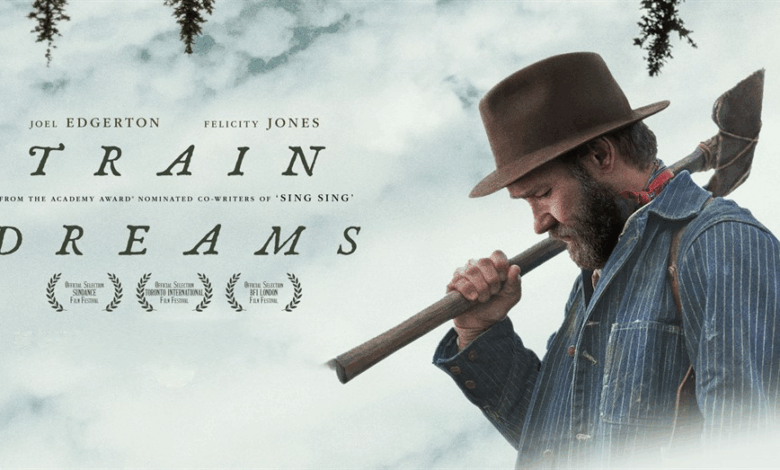
Film Profile:
- Title: Train Dreams
- Director: Clint Bentley
- Main Cast: Joel Edgerton, Felicity Jones
- Genre: Drama, Western, Historical
- Release Year: 2025
- Based on: The novella by Denis Johnson
Adapting literary masterpieces has always been a double-edged sword for filmmakers; especially when dealing with a work like Denis Johnson’s novella Train Dreams, which is built not on dialogue but on mental descriptions and atmosphere. The film Train Dreams is an ambitious and well-crafted attempt to portray this foggy and melancholic world. We are dealing with a work that, rather than adhering to classic Hollywood storytelling, seeks to create a visual and sensory experience. The filmmaker has reconstructed the American West of the early 20th century with exemplary obsession, but not the Wild West full of gunslingers and duels; rather, a West where railroad workers, loggers, and ordinary people grapple with harsh nature in silence. Technically and executively, the film is an admirable achievement. The production design, costumes, and historical texture are so precise that it feels as if the viewer has been thrown into the Idaho forests via a time machine. However, it is precisely at this point that the film initiates its biggest challenge with the audience: choosing a rhythm that might be a difficult test of patience for many modern viewers.
The narrative is deliberately designed to be slow and drawn-out. The life story of Robert Grainier (played by Joel Edgerton), a day laborer whose life is intertwined with tragedy and loneliness, flows like a calm and sometimes stagnant river. The director is in no hurry to get the character to the next point. He wants the audience, like Robert, to feel the weight of the passage of time and isolation. While this slow pacing contributes to the film’s poetic atmosphere, it occasionally severs the viewer’s emotional connection with the piece. We witness the daily life of a man whose world is changing, but the screenplay is stingy in creating dramatic turning points. This issue leads the audience to face a large question mark at the end of the film. The filmmaker has wrapped the semantic layers of the work in such ambiguity that the film’s final message seems vague. Is the film about the decline of nature in the face of industry? Is it an elegy for the loss of family? Or simply a portrait of an ordinary life lost to history? The film offers no clear answer to these questions, and this ambiguity, depending on the viewer’s taste, can be seen as a strength (as an open and contemplative ending) or a weakness (as an inability to conclude).
However, if one can look past the slow rhythm and ambiguous ending, we encounter a gem that is visually stunning. The cinematography of Train Dreams is undoubtedly its greatest strength and the main star of the show. Using natural light and wide framing, the cinematographer has created images that each resemble a classic painting. With smooth and fluid movements, the camera flaunts the grandeur of the forests, the thick mountain fog, and the loneliness of small man against the infinite nature. The lighting in the night and fire scenes is so masterful that it transmits the heat of the flames and the cold of the night to the audience’s skin. This visual beauty is not merely decorative; it compensates for the characters’ taciturnity and translates their inner emotions. In fact, nature in this film is not a background but one of the main characters, appearing sometimes kind and sometimes ruthless.
At the center of these beautiful frames, Joel Edgerton delivers a controlled and powerful performance as Robert Grainier. Playing a character who spends most of his life in solitude and silence, with sparse dialogue, is a difficult task. Instead of using words, Edgerton carries the heavy burden of grief and loss through his gaze, physicality, and micro-expressions. He succeeds in presenting a believable image of a hardworking, simple-hearted man who bends before life’s storms but does not break. His acting in the scenes of solitude, especially when grappling with memories of his wife and child, serves as the film’s emotional hook that holds the audience until the end. His chemistry with the surrounding environment and how he interacts with his tools and nature demonstrates a deep understanding of the role. Felicity Jones is also impactful in her shorter presence, but the film belongs entirely to Edgerton.
Looking more broadly at the filmography of Clint Bentley (the director), one can observe traces of the style previously seen in his acclaimed film Jockey. He is interested in exploring the lives of marginalized men and the gradual decline of traditional lifestyles. In Jockey, he also focused on the life of an aging rider with a calm rhythm and an observational camera. Train Dreams is the logical continuation of this path, but on a larger scale and with greater ambition. However, it seems Bentley became so enamored with creating atmosphere and beautiful frames in this film that he sometimes forgot to hold the narrative thread tighter. Ultimately, Train Dreams is a film that filters its audience. For those seeking storytelling, eventful, and transparent cinema, this film might seem like a boring and aimless experience. But for lovers of art cinema who enjoy watching eye-catching frames and subtle acting and have no issue with drowning in silence and ambiguity, this film can be a visual feast and a unique experience; an experience that, like a strange dream, eludes definition but leaves a lasting feeling.