Beyond the Degrees on the Wall: How Do We Know If This Psychologist's Couch Is Truly a Safe Place for Us?


The decision to start psychotherapy is one of the bravest, yet most vulnerable moments in anyone’s life. You are deciding to open up the most private layers of your being – the pains, fears, and secrets you may not have even admitted to yourself – to a stranger. This requires immense trust. But the big question is: How can we trust this stranger? In a world filled with fancy titles and colorful credentials, how do we know that the person sitting across from us is truly a “good therapist” who can help, rather than wasting our time, money, and most importantly, our hope? Finding the right therapist is strangely similar to finding a romantic partner or a close friend; it all comes down to “connection” and “fit,” but within a very precise professional framework.
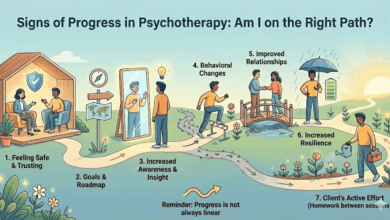
First and foremost, we must accept a fundamental principle in psychology: the most important tool of therapy is the therapeutic relationship itself. Countless studies over decades have shown that regardless of your therapist’s modality (whether they practice psychoanalysis, CBT, or existential approaches), the strongest predictor of treatment success is the quality of the “Therapeutic Alliance”—that secure, trust-based bond formed between you and the therapist. Therefore, the first and most important sign of a good therapist is the feeling you have in their presence. Do you feel safe? Do you feel heard without judgment? A good therapist creates a space where you are not afraid to express your most shameful or terrifying thoughts. If in the first few sessions you are constantly worried about what the therapist thinks of you, or feel they are looking down on you, this is a serious red flag. A good therapist possesses deep empathy; not meaning they pity you or cry with you, but that they see the world through your eyes and validate your pain, even if they don’t agree with your behavior.
However, safety and empathy alone are not enough; your therapist is not a compassionate friend, but a professional. The second sign of a good therapist is having structure and purpose. A professional therapist will define “treatment goals” with your help in the very first sessions. You need to know why you are there and where you are headed. Therapy sessions should not just become scattered venting sessions without direction. A good therapist has a roadmap (albeit flexible) and occasionally checks to see if you are moving on the right track. They are an active listener; meaning they don’t just sit and nod, but identify recurring patterns in your speech, ask precise questions, and help you discover blind spots you cannot see yourself. They must be able to balance “supporting” and “challenging.” If a therapist always validates everything you do, you won’t grow; and if they constantly challenge you, you will feel unsafe. The art of therapy is walking this fine line.
Another vital characteristic is maintaining professional and ethical boundaries. This is perhaps the most important difference between a therapist and a friend. The therapeutic relationship is a one-way relationship; the focus is 100% on you. A good therapist never turns sessions into a place to vent about their own personal problems. If your therapist starts oversharing about their personal life, or tries to establish a friendship, business, or (worst of all) romantic relationship outside the therapy room, you should leave that relationship immediately. These are gross violations of ethical principles. A good therapist is confidential, punctual, and keeps the framework of the session (time and cost) clear and consistent. These rigid frameworks, contrary to their appearance, are essential for creating a sense of safety for the client.
Another point that distinguishes good therapists is scientific humility and acceptance of feedback. Psychology is a complex science, and no one is omniscient. A good therapist will honestly state if they feel their approach is not helpful to you, or if your problem is outside their expertise, and may even refer you to another specialist. They do not get upset or defensive if you say “I’m not getting better” or “I don’t like this method”; instead, they use this feedback to correct the treatment course. A bad therapist is one who blames you if you don’t progress and labels you as “resistant to treatment,” whereas a good therapist accepts responsibility for their own share in the treatment process.
Ultimately, recognizing a good therapist is a combination of checking scientific credentials (which is a necessary prerequisite) and paying attention to your own inner intuition. A valid university degree and a license from the relevant psychological association are essential, but not sufficient. The best criteria are the answers to these questions after the first few sessions: When I leave their office, do I feel a weight has been lifted, or at least, have I found new hope and insight? Do I feel they truly understand “me,” rather than just seeing me as a psychiatric diagnosis? Remember, as a client, you have the right to choose your therapist, and if you feel this relationship isn’t working for you, you have the right to end it and look for someone else. Finding the right therapist may take time, but when you find that person, it can be one of the most valuable investments of your life.
Sources for Further Reading:
- American Psychological Association (APA): An article on how to choose a psychologist and what to expect. Link to APA article
- Psychology Today: A comprehensive article about the signs of a good therapist and Red Flags. Link to Psychology Today article
- Verywell Mind: A guide on the essential qualities of an effective therapist. Link to Verywell Mind article
- National Institute of Mental Health (NIMH): Basic information about types of psychotherapy and how to find help. Link to NIMH website