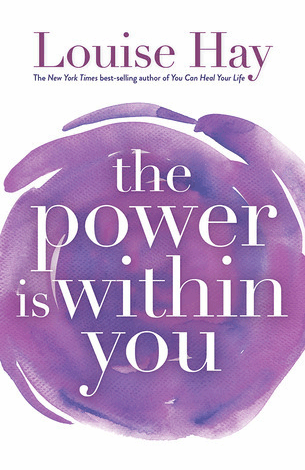
The name Louise L. Hay is familiar to anyone who has wandered through the self-help section of a bookstore. In the 1980s and 1990s, she became one of the most influential figures in the world of positive thinking and “inner healing.” Her books, especially You Can Heal Your Life and The Power Is Within You, sold millions of copies and helped define an entire generation’s idea of spiritual psychology. But behind that success lies a persistent question: does her message truly heal, or does it merely soothe?
Hay’s own story is dramatic. She rose from poverty and abuse, survived serious illness, and turned her recovery into a kind of personal gospel: that our thoughts shape our bodies, our emotions, and even our destiny. Pain, she argued, comes not from the world but from negative beliefs we carry inside. That belief system made her a cultural phenomenon, but it also became the source of her biggest weakness; a tendency to explain away complexity with comforting slogans.
Reading The Power Is Within You today, what stands out most is how shallowly it treats deep psychological ideas. Every few pages, Hay repeats a new affirmation: love yourself, trust yourself, smile at the universe, believe and it will happen. These phrases are warm and uplifting, but they dissolve the moment you test them against real experience. They replace understanding with reassurance.
Much of the book turns sophisticated concepts – self-awareness, forgiveness, emotional repression – into quick moral formulas. Hay insists that illness is a reflection of self-hatred, that every disease carries a psychological cause, and that healing begins simply by changing thought patterns. It’s an appealing fantasy, but also a dangerous one: it blames the sufferer for their suffering. If you are ill, it’s because you didn’t think positively enough. In that logic, compassion is replaced by guilt.
At times, Hay’s ideas slip into outright mysticism. She writes about “universal energy,” “spiritual vibration,” and “healing light” as if they were tangible forces. There’s no clear line between metaphor and fact, and the reader is left drifting in a haze of pseudo-science and pop spirituality. The tone becomes more like an afternoon TV pep talk than a serious exploration of the human psyche.
To be fair, her voice is undeniably warm. She writes with kindness, never arrogance. She knows how to comfort the anxious reader who feels lost. That’s part of why so many people around the world still find solace in her work. Hay was, above all, a gifted communicator; she could turn complicated emotions into gentle sentences that sound like someone holding your hand.
Still, the problem remains: The Power Is Within You looks deep but stays shallow. It borrows language from psychology and spirituality yet avoids the difficult questions both demand. There’s no exploration of trauma, no acknowledgment of social reality, no space for doubt. Everything is reduced to a universal solution – “love yourself” – as if self-love alone could replace therapy, medicine, or meaning.
For a reader seeking quick comfort, the book works like soft music in the background: calming,
reassuring, instantly forgettable. For a reader seeking truth, it feels hollow. The real paradox of Hay’s work is that she talks about power, but offers no tools to build it; only belief.
In the end, The Power Is Within You is a kind of cultural artifact; a snapshot of the self-help optimism of the 1990s. It’s a book with good intentions, written in beautiful language, but filled with half-digested psychology and new-age mysticism. Pretty words, little substance.
If I had to sum it up: it’s a lovely-looking book that says very little. It offers peace without understanding, healing without depth. A beautiful illusion; and, for all its charm, a deeply useless one.