The Lost Bus: A Real-Life Wildfire Story Where Special Effects Burn Bright but the Acting Fades

When the Flames Arrive Uninvited: The Visual Terror and Human Silence of The Lost Bus
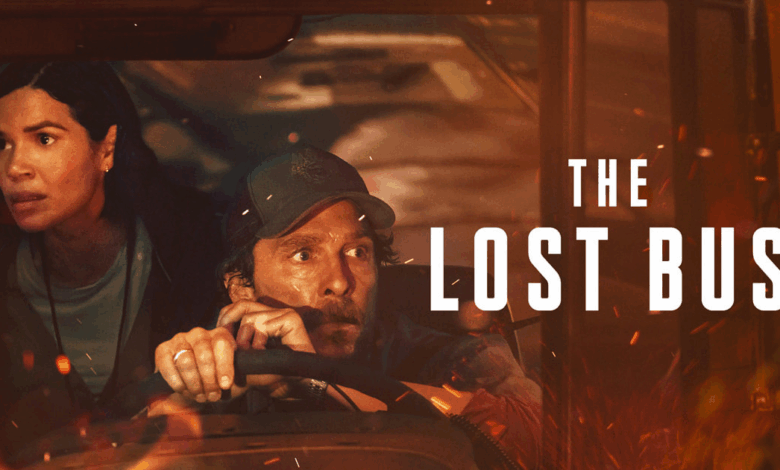
The Lost Bus (۲۰۲۵), directed by Paul Greengrass, is inspired by the true events of California’s 2018 Camp Fire; one of the deadliest wildfires in modern U.S. history. The film stars Matthew McConaughey as Kevin McKay, a school-bus driver, and America Ferrera as Mary Ludwig, a teacher, who together must save twenty-two children trapped in the inferno. It’s a film built on real heroism and unbearable panic, a survival story that captures the terror of nature and the fragility of human calm.
From its first frames, the film bears Greengrass’s unmistakable signature; handheld cameras, fragmented editing, and an urgent realism that makes the viewer feel trapped inside the scene. The special effects are stunningly executed: fire rolling over hillsides, smoke swallowing light, the metallic groan of the bus as heat bends its frame. These moments look painfully real, not like digital spectacle but like chaos filmed through tears. The immersive tension becomes the film’s true heartbeat.
Yet when the flames subside, the human performances don’t burn quite as bright. McConaughey delivers his usual grounded intensity, but the ensemble around him — especially the children — often feels more symbolic than alive. Their fear looks rehearsed, their dialogue too polished. You sense that Greengrass’s camera is chasing emotion, but the actors can’t always keep up with the inferno surrounding them. The result is a film that feels emotionally uneven: visually breathtaking, but dramatically restrained.
Adapted from Lizzie Johnson’s nonfiction book Paradise: One Town’s Struggle to Survive an American Wildfire, the screenplay by Brad Ingelsby tries to balance realism and sentiment. The dialogue touches on community, sacrifice, and guilt — the moral debris left after disaster — but it never quite achieves the raw intimacy of Greengrass’s best works like United 93 or Captain Phillips. What stays with you are not the words, but the images: faces illuminated by orange light, hands gripping the bus seats as if prayer could stop the flames.
Technically, The Lost Bus is a master class in controlled chaos. The visual effects team recreated the fire through a blend of miniature models, digital layering, and practical smoke rigs. The result is an almost tactile realism that critics have compared to the storm sequences of Twister or Deepwater Horizon; except here the threat is quieter, slower, more suffocating. Cinematographer Barry Ackroyd’s camera shakes just enough to mimic human fear, never slipping into gimmick. The editing rhythm keeps viewers on edge without disorienting them completely.
Still, the human layer — the emotional weight of those being saved — is less fully realized. Some of the child actors seem under-directed; their fear feels external rather than psychological. Scenes that should devastate sometimes pass like procedural checklists. The film’s greatest strength, its realism, paradoxically distances us: everything looks so authentic that we stop feeling its mystery.
Critics have praised The Lost Bus for its craftsmanship but also noted this imbalance. The Washington Post called it “a technical marvel that forgets to breathe once the fire goes out.” Others admired Greengrass’s commitment to truth, saying that even when emotion falters, the moral urgency remains. Indeed, the film’s message is simple yet sobering: heroism is not cinematic; it is chaotic, imperfect, and often unseen.
Watching The Lost Bus, you understand why Greengrass chose this story. It fits his obsession with real-time crises, ordinary people facing impossible circumstances. But it also reveals the limits of his style: his kinetic realism captures the event better than the aftermath. When the fire ends, so does the film’s pulse. You wish it lingered a little longer in the silence that follows; in the guilt, the exhaustion, the small acts of kindness that no camera can dramatize.
In the end, The Lost Bus is a film you respect more than you love. It is thrilling, exhausting, and visually impeccable, yet it leaves emotional ash behind rather than flame. The special effects are the true protagonists; the people sometimes feel secondary. But perhaps that is the point; in a disaster, nature always takes center stage. The film reminds us that survival stories are never just about who escapes, but about what is lost in the escape.