You Are Not a Hostage! 6 Rights Your Therapist Must Respect (That They Might Not Tell You)

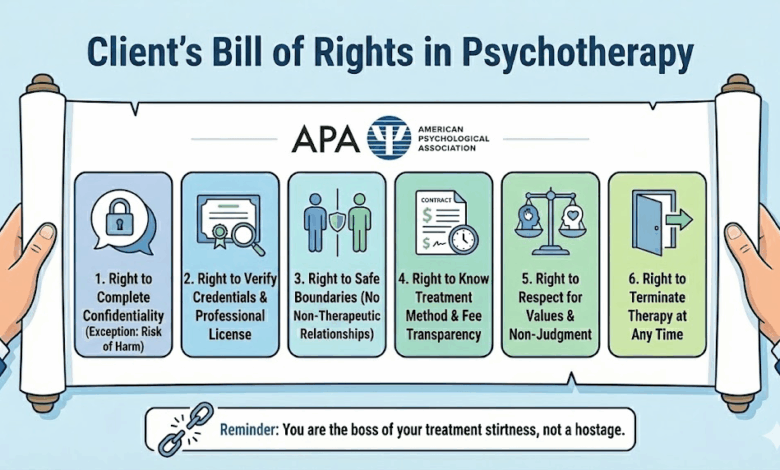
When you walk into a psychologist’s office and sit on that couch or chair, you are usually in your most vulnerable emotional state. You have come to speak of your pain and seek help. In such circumstances, it is easy to forget that this is not a one-way relationship where the therapist has “absolute power” and you are the “subordinate.” On the contrary, therapy is a bilateral contract, and you, as the client, have strict legal and ethical rights. Knowing these rights is armor that protects your psyche from potential harm. Let’s review the “Client’s Bill of Rights” together; rights that, if violated, mean not only is the therapy useless, but it must be stopped immediately.
۱. The Right to Confidentiality (With Few Important Exceptions) The cornerstone of therapy is confidentiality. Anything you say in the therapy room must stay there. The therapist has no right to speak about your case with your spouse, parents (if you are over 18), employer, or anyone else without your written permission. Even if someone calls them, they do not even have the right to confirm that you are their client. Important Note: This right is broken only in three cases (and the therapist must state this in the first session): 1. If you intend to seriously harm yourself (suicide). 2. If you intend to seriously harm another person (homicide). 3. In cases involving child abuse. In these instances, preserving life takes priority.
۲. The Right to Know the Therapist’s Qualifications and Licensing You have the right (and you must) ask! It is not disrespectful to ask your therapist: “What is your educational degree?”, “Which organization are you licensed by?”, or “Have you been trained in my specific problem?”. A professional therapist answers these questions openly and shows you their license (which should usually be on the wall). If the therapist evades these questions or gets upset, it is not a good sign.
۳. The Right to Safe Boundaries (Prohibition of Dual Relationships) This is one of your most important rights. The relationship between you and the therapist must exist only and strictly within the framework of the therapy room. Your therapist cannot simultaneously be your friend, business partner, university professor, or lover. Any suggestion of a sexual or romantic relationship from the therapist is a flagrant violation of client rights and an abuse of power. Also, the therapist should not ask you for personal services (e.g., asking you to handle their legal matters just because you are a lawyer).
۴. The Right to Know the Treatment Method and Costs (Informed Consent) You should not walk in the dark. You have the right to know what method the therapist plans to use. Is it just talk therapy? Will you take medication? Do homework? How long is the estimated duration of treatment? You also have the right to full transparency from the very beginning regarding costs, cancellation policies, and the length of each session. There should be no hidden fees.
۵. The Right to Non-Judgment and Respect for Values You have the right to be respected regardless of your beliefs, religion, sexual orientation, ethnicity, or lifestyle. The therapist has no right to impose their personal, religious, or political values on you or humiliate you for your choices. If you feel the therapist is “preaching” based on their personal beliefs, they are violating your rights. The therapy room is not a place for sermons; it is a place for understanding.
۶. The Right to Terminate Therapy You are not “stuck” in therapy. The moment you feel this treatment is not helping you, you are not connecting with the therapist, or for any reason (even financial) you do not wish to continue, you have the right to stop the therapy. The therapist can offer their professional opinion and warn of potential risks of stopping treatment, but they cannot force you to stay by creating guilt, fear, or emotional manipulation.
Ultimately, remember that the therapist is “hired” to help you. You are the boss of your own treatment process. If you feel any of these rights are being ignored, first (if it is safe) discuss it with the therapist themselves, and if you do not get an answer, you have the right to leave treatment and, in serious cases (like sexual abuse or breach of confidentiality), file a complaint with the relevant psychological licensing board.
Sources for Further Reading:
- Code of Ethics for Psychologists (Psychology and Counseling Organization of Iran): The main source of professional rules in Iran. Link to PCO Iran Website
- APA (American Psychological Association): An article about client rights in psychotherapy. Link to APA article
- GoodTherapy: A comprehensive list of client rights in therapy sessions. Link to GoodTherapy article
- PsychCentral: Signs of boundary violations in therapy and client rights. Link to PsychCentral article