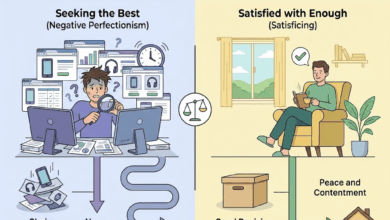
Freedom of choice sounds like a gift. From grocery aisles to dating apps, the modern world promises us endless options. Yet psychologists warn that the abundance of choices has created a new kind of anxiety; choice paralysis, a state in which having too many options makes it harder to decide and easier to regret.
Psychologist Barry Schwartz, in his famous book The Paradox of Choice, argues that more freedom doesn’t always mean more happiness. The human brain, he notes, evolved to make decisions quickly, not to evaluate dozens of alternatives. When choices multiply, our cognitive system becomes overloaded, and instead of feeling empowered, we feel trapped.
In a classic experiment, researchers set up two tasting tables for jam in a supermarket. One offered six flavors, the other twenty-four. Although more people stopped at the larger display, far fewer actually bought anything. Those who had fewer options made decisions faster and reported more satisfaction afterward. Too many choices, it seems, exhaust the mind before the decision even happens.
This same phenomenon plays out in our daily lives; choosing what to wear, what movie to watch, even which message to reply to first. The constant micro-decisions drain our mental energy, a process psychologists call decision fatigue. Over time, it creates a subtle sense of emptiness: we live surrounded by abundance but rarely feel free.
Sociologists view this as a symptom of consumer culture. Modern society measures value through choice; the more you can buy, know, or experience, the more successful you appear. Yet this very abundance breeds dissatisfaction, because every choice implies the rejection of countless other possibilities. The result is a perpetual sense that we could have done better; a quiet form of regret that follows us everywhere.
Positive psychology offers an alternative: the problem isn’t freedom itself, but how we relate to it. Satisfaction increases when our choices reflect our values, not our impulses. Freedom without direction is chaos; freedom with purpose becomes meaning. True contentment comes not from having many options, but from knowing which ones matter.
That’s why many successful people simplify their daily routines. Steve Jobs, Barack Obama, and others famously wore similar outfits every day; not out of vanity, but strategy. By removing trivial decisions, they preserved mental energy for choices that truly counted. This minimalist approach is not a rejection of freedom, but a disciplined way to use it.
In the end, perhaps the greatest skill in the age of abundance is not the ability to choose from everything, but the courage to choose less. To say no to the noise, and yes to what aligns with who we are.
Real freedom begins when we stop chasing every option; and start choosing with intention.
Sources:
Schwartz, B. (2004). The Paradox of Choice: Why More Is Less. HarperCollins.
Iyengar, S. & Lepper, M. (2000). When choice is demotivating: Can one desire too much of a good thing? Journal of Personality and Social Psychology.