When Taboo-Breaking Goes Astray; Why "Womb" Is Not Just Boring, But Disturbing

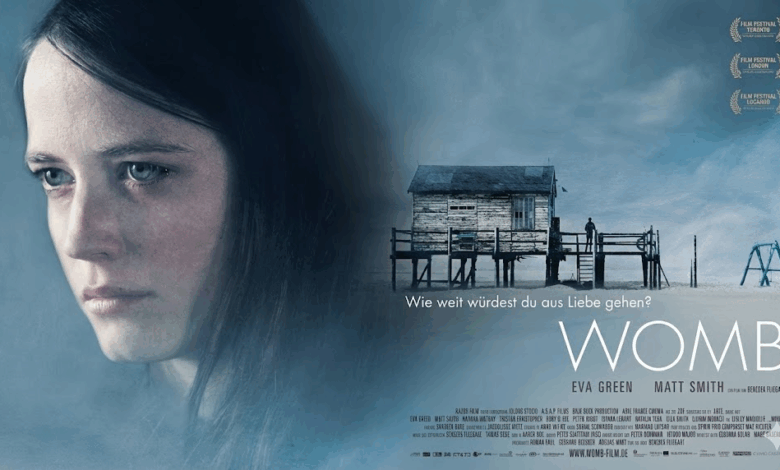
Film Profile:
- Title: Womb
- Director: Benedek Fliegauf
- Cast: Eva Green, Matt Smith
- Genre: Drama, Romance, Sci-Fi
- Year: 2010
- Country: Germany, Hungary, France
In the history of cinema, there is no shortage of films that fall victim to their own “big idea”; works that seem amazing, shocking, and philosophical on paper, but lose all their magic when translated into images. Womb is one of the most prominent examples of this phenomenon. The central premise is so bold and engaging that hearing the synopsis alone is enough to intrigue any cinephile: a woman who, after the sudden death of her lover, decides to use cloning technology to give birth to him again, raise him herself, and eventually fall in love with him once more. This is a pure dramatic situation that shatters the boundaries of morality, maternal love, and Freudian complexes. However, unfortunately, Hungarian filmmaker Benedek Fliegauf failed to bear the weight of this heavy concept, and the result is a work that buries its immense potential in a cold and soulless silence. The screenplay, which should be the backbone of such a complex narrative, is its greatest weakness. Instead of analyzing the psychology of a woman who makes such an insane decision, the writer has settled for the most superficial layer of the story. The screenplay is incapable of developing turning points, and the time jumps merely create plot holes instead of showing the evolution of the relationship.
The rhythm of the film deals the second fatal blow to the body of the work. Slowness in European art cinema is usually a tool for contemplation, but in Womb, this slowness has become an attritional and annoying factor. Long, drawn-out shots of gray beaches, crashing waves, and characters staring at the horizon, while setting the mood in the initial minutes, very quickly lose their function and turn into a futile attempt to fill the film’s runtime. The director tried to create a poetic atmosphere by removing dialogue and relying on imagery, but since the internal content of the scenes is empty, this poetry turns into sheer boredom. The audience is constantly waiting for something to happen or for tension to arise, but the film indifferently bypasses all suspenseful potential and continues to beat the drum of stagnation. On the technical side, the music is either absent or so identity-less and vague that it evokes no feeling. The repeated use of ambient sounds (wind and sea), instead of creating atmosphere, intensifies an annoying sense of loneliness and emptiness.
However, beyond the technical and narrative weaknesses, the film is severely criticized in another aspect: the reckless crossing of ethical boundaries in direction. One of the most disturbing aspects of the film is the way child actors are used in situations laden with heavy, complex, and even obscene meaning. Placing small children in scenes with sexual subtext or unconventional adult tensions was a wrong and unethical decision by the filmmakers. Watching a child who is unwittingly involved in psychological games and the significant gazes of the mother character (who was actually in love with the original version of him) conveys an unpleasant sense of instrumental exploitation to the audience. Although cinema is a space for breaking taboos, using children to imply concepts that are impossible for their age to understand, and whose presence in that space is inappropriate, is not art but a form of directorial irresponsibility. Instead of showing the depth of the tragedy or the woman’s psychological complexity, these scenes merely cause discomfort and revulsion for the viewer.
Finally, the acting, which could have been the film’s only saving grace, has been downgraded to “average” under the influence of the weak screenplay and direction. Eva Green, usually known for her passionate performances and piercing gazes, seems to have her hands tied here. She tries to show the internal turmoil of a woman wandering between maternal love and sexual desire through facial expressions, but because the screenplay does not provide her with enough situations, her acting appears limited. Matt Smith, in the role of Thomas, also delivers a flat performance, and the necessary chemistry between him and Eva Green does not form. Womb is a film that proves having a brilliant idea alone is not enough. This film resembles a sterile laboratory; clean, cold, and devoid of life, where a fascinating subject has fallen victim to a lackluster execution and questionable ethical decisions.