Kindness is often celebrated as one of the most beautiful human qualities, yet modern psychology reveals a more complicated truth: even kindness has a cost. When a person constantly absorbs the pain of others, their emotional system can become overloaded. This phenomenon is known as compassion fatigue; a form of emotional burnout that affects people who care deeply and consistently.
Neuroscience shows that empathy is not a simple emotional reaction. When we witness someone else’s suffering, the same brain regions that register our own physical pain become active. The brain responds as if the pain belongs to us. In the short term, this shared experience increases human connection; in the long term, it drains internal emotional resources.
Certain groups are especially vulnerable: therapists, nurses, teachers, social workers, caregivers, and even highly empathetic friends and parents. These individuals face a steady stream of emotional distress, leading the mind to defend itself by shutting down or numbing feelings. The signs are subtle at first – irritability, emotional detachment, chronic tiredness – but over time, the person may feel hollow, overwhelmed, or unable to care as deeply as before.
A study from the University of Zurich found that empathic individuals exposed repeatedly to others’ suffering showed elevated cortisol levels, indicating chronic stress. Those who practiced “compassionate distance” – caring without fully merging emotionally – remained more stable and emotionally resilient.
This distinction is crucial:
Empathy is feeling another’s pain.
Compassion is understanding another’s pain without drowning in it.
Kristin Neff, a leading researcher on self-compassion, argues that kindness is sustainable only when paired with kindness toward oneself. A person who neglects their own emotional boundaries will eventually lose the capacity to help others.
From a sociological perspective, compassion fatigue isn’t just an individual issue – it’s a collective one. In a world saturated with news, crises, violence, and online images of suffering, our emotional systems are overwhelmed. The result is “collective emotional numbing,” a defensive response where people grow desensitized not because they are cold-hearted, but because they are exhausted.
The solution is not to stop caring. It’s to care wisely.
This means:
Creating emotional boundaries.
Allowing ourselves to step back when needed.
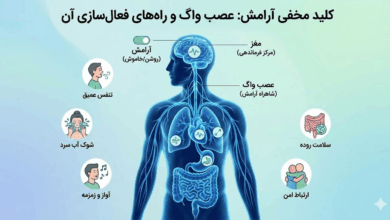
Practicing mindfulness and conscious breathing.
Balancing giving with receiving.
True kindness doesn’t require self-destruction. It requires balance.
As the familiar airplane instruction says:
“Put on your own oxygen mask first, then help others.”
Sustainable compassion begins exactly there.
Sources:
Klimecki, O. et al. (2023). Empathic distress and compassion fatigue: Neural and hormonal mechanisms. Nature Human Behaviour.
https://www.nature.com/articles/s41562-023-01513-6
Neff, K. (2021). Self-Compassion: The Proven Power of Being Kind to Yourself. HarperCollins.
https://self-compassion.org/book/