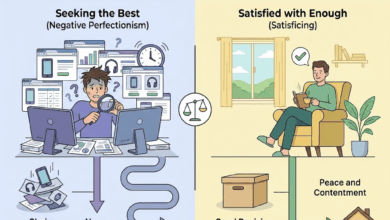
We all know the feeling: that brief rush when we finally get what we wanted – the job, the trip, the relationship – followed almost instantly by a quiet emptiness. The mind whispers, “What’s next?”
A recent study published in the Journal of Experimental Psychology, titled The Pursuit of More: Why Satisfaction Keeps Escaping Us, explores this endless cycle. Researchers call it the Satisfaction Trap; the modern paradox where the closer we get to happiness, the faster it slips away.
The study explains that the human brain isn’t wired for contentment; it’s wired for pursuit. Evolutionarily, that was useful. Our ancestors who never stopped searching for more – food, shelter, safety – survived. But in the modern world, that same mechanism keeps us perpetually restless.
In one experiment, participants listed personal goals and tracked their emotions before, during, and after achieving them. The data revealed a sharp rise in satisfaction right after success, followed by a rapid return to baseline; sometimes even lower. This pattern is known as hedonic adaptation: the tendency of pleasure to fade as we get used to what we have.
Interestingly, the study found that this effect is stronger among more educated and ambitious individuals. The analytical mind doesn’t rest even in happiness; it evaluates, measures, and compares. “Could I have done better?” “Do others have more?”
As one of the authors notes, “We no longer suffer from a lack of things; we suffer from an inability to feel complete.”
Social media amplifies this cycle. Each post, image, and success story triggers the brain’s reward system, urging us to chase more. Seeing others’ happiness activates the same neural circuits as hunger. In other words, watching someone else thrive can feel like being hungry in front of a feast you can’t touch.
But the researchers argue that the solution isn’t to kill desire; it’s to reshape our relationship with it. Desire is not the problem; the constant fleeing from satisfaction is. The key lies in learning to pause; to stay, for a moment, in the quiet after achievement without rushing to the next chase.
In another experiment, participants practiced a simple three-minute exercise: noticing what they already had without judging or comparing. Within two weeks, their reported sense of contentment rose significantly. The lesson was clear; satisfaction doesn’t come from acquiring; it comes from recognizing.
The paper concludes with a line that reads almost like philosophy:
“Modern humans keep moving not because they haven’t found enough, but because they’ve forgotten how to stop.”
If the mind is a search engine, then perhaps true satisfaction is learning when to stop typing.
It’s not something we find out there; it’s the moment we finally stay still long enough to feel it.
Source: Journal of Experimental Psychology – The Pursuit of More: Why Satisfaction Keeps Escaping Us