A Kind Lie That Saved a Life: When Simplicity Becomes the Language of Emotion.

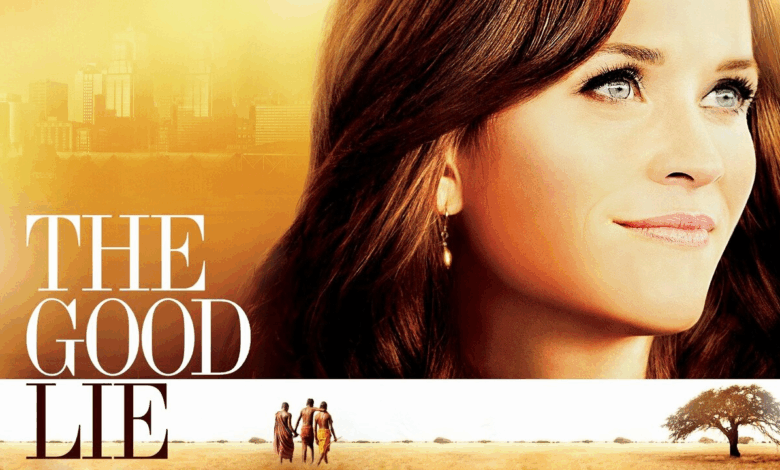
The Good Lie (۲۰۱۴), directed by Philippe Falardeau, is a quiet and heartfelt drama inspired by the true story of the “Lost Boys of Sudan.” The film stars Reese Witherspoon, Arnold Oceng, Ger Duany, and Emmanuel Jal, with a screenplay by Margaret Nagle and music composed by Martin Léon.
The story follows three young men and one woman who flee the horrors of the Sudanese Civil War and eventually find refuge in the United States. There, they meet Carrie (played by Witherspoon), an employment officer assigned to help them adapt to their new lives. What unfolds is less a tale of political survival and more a study in human resilience; a series of small, intimate moments that bridge two vastly different worlds.
From a cinematic perspective, the film is simple. Sometimes too simple. The structure is predictable, the pacing uneven, and some of the direction feels uncertain. Certain scenes drag on, and some of the character development, especially Witherspoon’s role, remains surface-level. In short, The Good Lie is full of flaws; but it succeeds where it matters most: it moves the heart.
The emotional core of the film lies in its authenticity. The Sudanese actors bring a quiet honesty to their performances that transcends the film’s structural limitations. When they recall their past, the silences between their words speak louder than the dialogue itself. Those moments feel real, unpolished, and deeply human. Falardeau knows how to touch emotions without turning them into sentimentality. He walks that fine line between empathy and manipulation; and for the most part, he stays on the right side of it.
Thematically, The Good Lie is about hope; not cheerful or naïve hope, but the kind born from loss. It’s about the lies we sometimes tell to protect what’s left of our humanity. The title’s meaning reveals itself gradually: “the good lie” is the kind of falsehood that saves rather than deceives, the story you invent so that another person can live. By the end, when one of the characters sacrifices himself to secure the future of another, the title stops being metaphorical; it becomes painfully literal.
Technically, the film doesn’t break new ground. It’s shot cleanly but conventionally, its production design subdued, and its score emotionally direct. But perhaps that simplicity is what makes the emotion work. There are no grand gestures, no sweeping cinematography to distract from the story. Everything exists in service of the characters’ quiet dignity.
Ultimately, The Good Lie is a modest film with a big heart. It doesn’t astonish or innovate, and it certainly doesn’t reach for perfection. But in its simplicity, it finds something honest. You don’t walk away thinking about technique or dialogue; you leave thinking about kindness, survival, and the weight of compassion in a world that rarely rewards it.
It’s not a film that shouts; it whispers. And sometimes, that’s enough.